
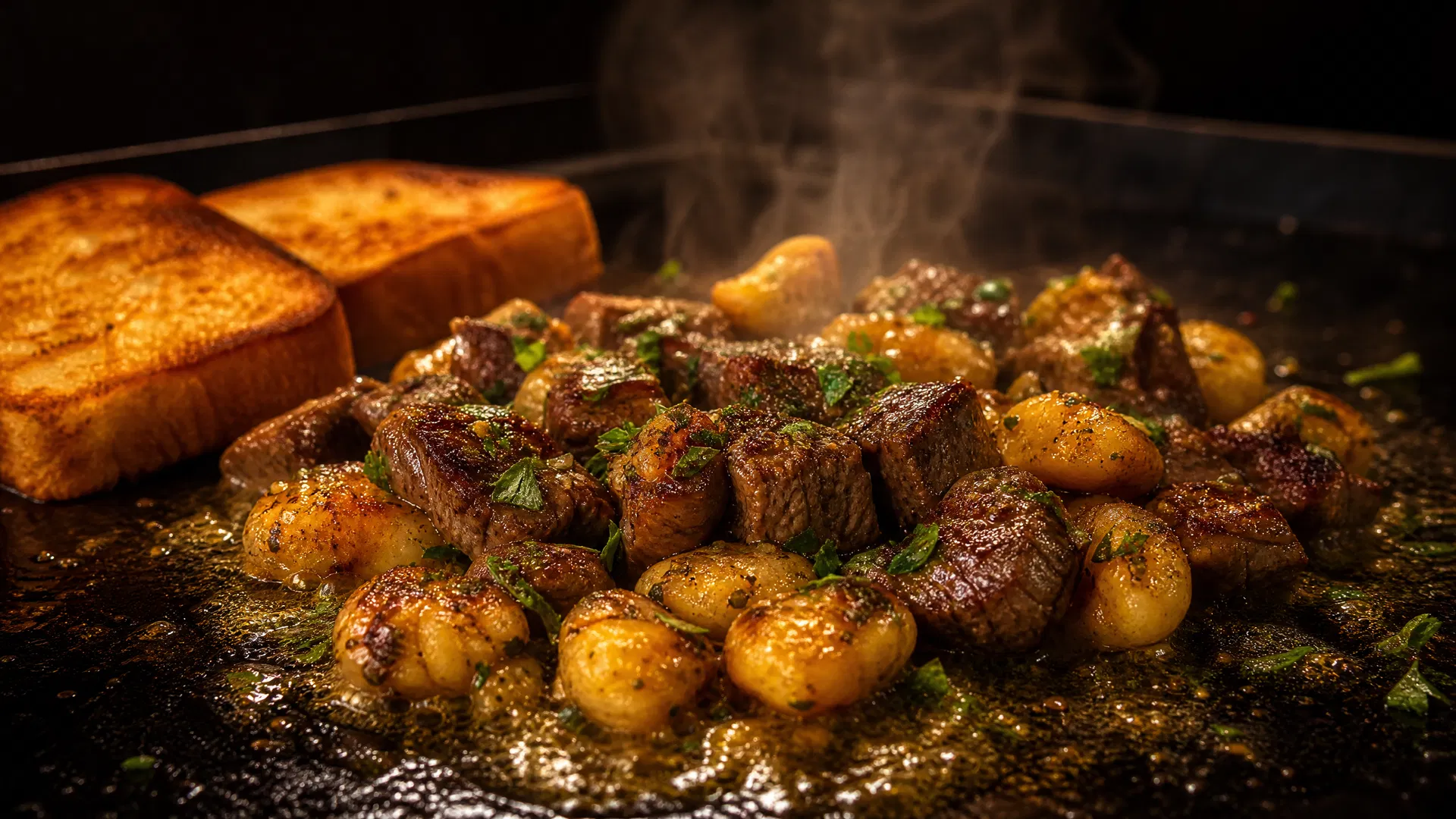
If you have never cooked gnocchi on a Blackstone, you are seriously missing out.
Most people think gnocchi belongs in a pot of boiling water. And it absolutely can. But put those little potato pillows on a hot, buttered Blackstone and something completely different happens: they get golden and crisp on the outside while staying soft, tender, and pillowy in the middle.
It is one of those simple flat-top tricks that immediately earns a regular spot in the rotation. Whether you build it into a steak dinner, toss it with chicken and vegetables, or let it carry a garlic-butter sauce all on its own, crispy griddled gnocchi is a game changer.
Why the Blackstone Works So Well
The secret is surface contact. On the griddle, each piece of gnocchi gets direct heat and enough room to develop color instead of steaming in a crowded pan. Butter brings flavor and helps with browning; a little oil keeps the butter from scorching too quickly.
That combination creates the best of both worlds: a golden crust with a soft, comforting center. Think crispy potatoes meeting pasta — with all the nooks and ridges ready to hold onto sauce.
Start with the Right Gnocchi
For a quick weeknight cook, a 16-ounce package of shelf-stable or fresh potato gnocchi works great. If your package calls for boiling, cook it according to the package directions first, drain it well, and let the excess moisture steam off before it hits the griddle. That dry surface is what helps it brown instead of turn soft.
If you are using a shelf-stable gnocchi that is ready for the pan, keep the same goal in mind: do not crowd the flat top, and give each piece enough room to get crisp.
The Blackstone Gnocchi Method
1. Preheat one zone to medium-high.
You want a properly hot cooking surface, not an all-out blast of heat. Medium-high gives the gnocchi time to brown without burning the butter before the centers warm through.
2. Add butter and a little oil.
Use enough butter to coat the area where the gnocchi will cook. Add a small amount of high-heat oil to help protect the butter and keep everything moving. As soon as that butter starts to foam, you are ready.
3. Spread the gnocchi into a single layer.
This is the part that matters most. Do not pile it up. Spread it out and let it sit long enough to develop color. If you keep stirring every few seconds, you will never get the crust.
4. Let it sear, then turn it.
Give the first side a few minutes until you see golden-brown edges and light crispness. Use a spatula to turn the pieces and repeat. The gnocchi does not need to be perfect on every side; it just needs enough browned surface to bring that texture.
5. Finish with your flavor.
Garlic and fresh herbs are always a strong move. Add minced garlic toward the end so it does not burn, then finish with another small knob of butter, parsley, Parmesan, a squeeze of lemon, or your favorite seasoning. From there, it is ready to be the base for a bigger meal or the star of the plate.
The Biggest Mistakes to Avoid
The first mistake is starting with a wet gnocchi. Moisture will steam the surface and fight the crispness you want. Drain cooked gnocchi well and give it a minute to dry before it goes on the griddle.
The second is overcrowding. Gnocchi needs room. Work in batches if necessary.
The third is moving it too early. Let the Blackstone do its thing. When the gnocchi releases easily from the surface and has that golden color, then it is time to turn.
Build It Your Way
Once you have the technique down, the possibilities are wide open. Pair crispy gnocchi with steak bites and garlic butter for a backyard dinner that feels like a restaurant plate. Add grilled chicken, spinach, sun-dried tomatoes, and Parmesan for something creamy and comforting. Or crisp the gnocchi with onions and peppers, then finish it with a spicy sauce for an easy flat-top bowl.
The point is simple: stop thinking of gnocchi as something that only comes out of a pot. Give it a hot Blackstone, butter, space, and a little patience.
You will not go back.
— Daddio on the Patio