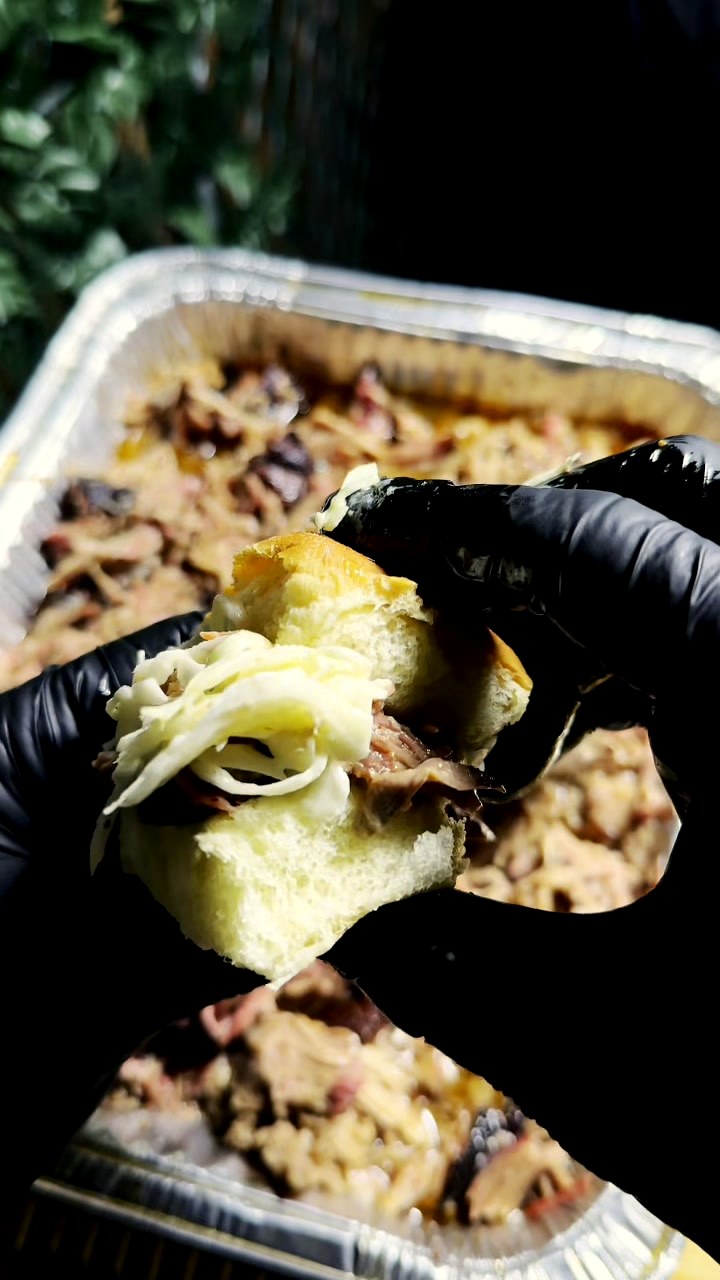
"Start small for your first kettle cook," they said. Burgers. Maybe some dogs. They don't know me. First cook on my new-to-me Weber kettle, I went straight for a whole pork butt — fat cap scored, mustard binder, a heavy coat of rub, and a charcoal snake laid around the kettle with wood chunks riding on top. Light one end and the kettle feeds itself for hours. I ran it to 160° internal, wrapped it in a pan with a pour of apple juice, and took it to 204° — rested it, opened it up, and the bone slid out clean like it was never attached. Shredded by hand, tossed through its own juices, piled on slider rolls with coleslaw. The kettle has officially joined the arsenal.
Why This One Works
They told me to start small for my first cook on a new-to-me Weber kettle. Burgers, maybe dogs, learn the cooker first. They do not know me. I bought a whole pork butt instead, because a kettle is fire in a bowl with a lid, and I wanted to know what this cooker in my lineup could really do. The snake method is what made that confidence reasonable instead of reckless.
Here is why the snake works so well for pulled pork: charcoal laid in a ring, with wood chunks riding on top, burns slowly around the kettle as it lights its way along, so the fire feeds itself for hours without me refueling or chasing temperatures. That steady, gentle heat is exactly what a pork butt asks for — time to build bark, time to take on smoke, and time for a tough cut to turn tender. The lid lifts on this cook were checkpoints, not peeks, and every one of them earned its place. I figured if the kettle could handle this, it could handle anything I asked of it later — and I would learn more from one honest long cook than from a dozen easy ones.
Daddio's Notes
Two numbers ran this cook for me, and I trust them together with feel. At 160°F, with the bark dark and set and the stall settling in, the butt went into a pan with a pour of apple juice and got sealed up to push through. At 204°F, when the probe slid in like butter, it was done — and the proof came at the pull, when the bone slid out completely clean. If your bone fights you, the pork is not there yet, no matter what the clock says.
Resting in that sealed pan matters, because rested pork pulls juicier pork, and tossing the hand-pulled meat back through its own pan juices is what makes every bite taste seasoned and moist instead of dry at the edges. My beginner mistakes to avoid are all about nerve: do not keep lifting the lid out of curiosity, do not rush the stall, and do not skip the rest. Serve it the way I did — piled on slider rolls with coleslaw — and save any extra for its second act, because this exact pork went on to become a grilled cheese my patio is still talking about. That learning curve is the other gift of this cook. I came away knowing how this kettle breathes, how the snake behaves over a long cook, and why walking away is sometimes the most skilled move a cook can make.
📖 Full Recipe Saved for the Next Cookbook
This one's a brand-new cook — the full ingredient list and step-by-step instructions are being saved for the next Daddio cookbook. For now, enjoy the teaser: the photo, the story, and all the flavor talk.
Want 50 recipes you can cook right now? Daddio on the Patio: 50 Easy Backyard BBQ & Blackstone Recipes is OUT NOW on Amazon — get your copy here.
🔥 Get Daddio's Griddle Recipe Starter Pack
5 free recipes — PB&J, smash burgers, fried rice, bacon egg & cheese, quesadillas. Plus first dibs on new recipes, books, and drops.